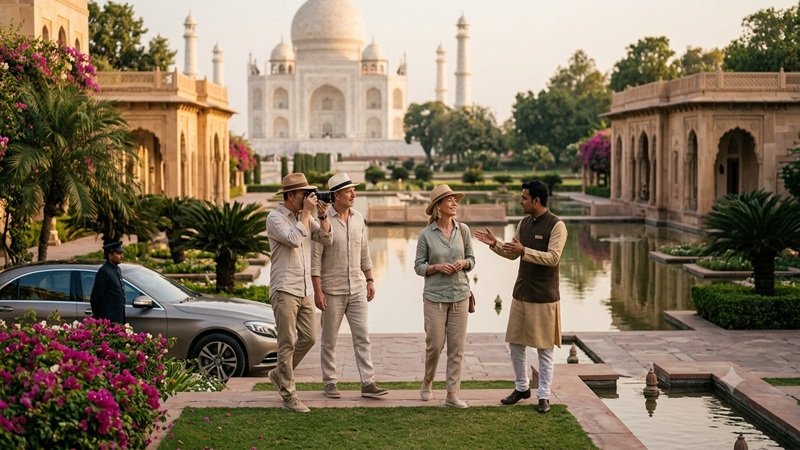
The Golden Triangle has to be the first choice for anyone exploring India. It is called the golden triangle because it looks like a triangle when we see it on a map connecting three extraordinary cities Delhi, Agra, and Jaipur. It offers the perfect blend of all architecture,culture ,history and luxury and because of this tourists from countries like usa, canada,australia love to visit it.
The Realities of the Route
The Geography: It is roughly a 720-kilometer loop. Do not attempt to rent a car and drive yourself; Indian traffic requires a seasoned, defensive local driver who knows the highway rhythms. Stick to private, air-conditioned transfers booked through a reputable operator. Do not rush to visit or complete it quickly, give it at least five to seven days. If you will rush and try to complete this in three days, it means you will spend more time staring at taillights than looking at history.
What Makes Golden Triangle Tour India Special?
The Golden Triangle Tour India stands out because it offers three completely different vibes in one trip:
- Delhi – A mix of old-world charm and modern energy
- Agra – Home to the timeless Taj Mahal
- Jaipur – A royal city filled with palaces and heritage
For international travelers, this diversity makes the journey incredibly rich and memorable.
Delhi: The Historic Capital
Delhi is a massive collision of ancient dynasties and modern metropolitan energy. It requires pacing, but the rewards are endless.
Must-Visit Sights
- Humayun’s Tomb: A stunning red sandstone and white marble complex that served as the architectural inspiration for the Taj Mahal. Go in the late afternoon for incredible light.
- Qutub Minar: A towering 12th-century victory minaret surrounded by fascinating, intricate ruins and an ancient iron pillar that refuses to rust.
- Jama Masjid & Red Fort: The true center of Old Delhi. Walking through them gives you a real feel for just how massive and powerful the Mughal empire was.
Iconic Foods to Try
- Parathas at Paranthe Wali Gali:Visit Chandni Chowk to try deep-fried, stuffed Indian flatbreads also called as prathas dripping with butter and served with potato curries and pickles.
- Old Delhi Kebabs: Near Jama Masjid try kebabs from stalls
- Butter Chicken: Invented in Delhi, a rich, velvety tomato-and-cream curry best eaten with warm garlic naan.
Best Local Markets
- Chandni Chowk: A complete pack of almost everything from wedding textiles and spices to silver jewelry and electronics.
- Dilli Haat: An open-air craft bazaar that brings together artisans, textiles, and regional foods from all over India in one clean, easy-to-navigate space.
- Janpath Market: Perfect place for buying clothing, brass trinkets and leather goods.
Agra: The City of the Mughal Masters
In Agra Taj Mahal is not the only place to visit, it holds centuries of unique craft and lesser-known architectural gems.
Must-Visit Sights
- The Taj Mahal: Arrive early in the morning mist clears and the white marble shifts from soft blue to a warm golden glow.
- Agra Fort: A massive red sandstone fortress where emperors lived, plotted, and gazed out at the river toward the Taj.
- tmad-ud-Daulah (Baby Taj): Often called the Baby Taj, it is a quiet, intimate marble mausoleum by the river side.
Iconic Foods to Try
- Peda: Agra’s signature sweet. It’s a simple, rich bite of condensed milk, sugar, and cardamom.
- Bedmi Puri with Aloo: The ultimate Agra breakfast.Bedmi Puri with Aloo: A crispy, deep-fried bread packed with spiced lentils, eaten with a sharp and spicy potato curry.
- Mughlai Food: Slow-cooked kormas, flavorful biryanis, and paper-thin roomali rotis.These recipes haven't changed much since they were served in royal Mughal courts.
Where to Shop in Agra
- Kinari Bazaar: Right near the fort, this crowded wholesale market is great for traditional embroidery, leather shoes (juttis), and colorful wedding shopping.
- Sadar Bazaar: The best place for leather bags, local sweets, and marble souvenirs. (A quick tip: Have your driver take you straight to government-approved stores so you don't get tricked into buying cheap plastic instead of real marble inlay).
Jaipur: The Pink City
Jaipur is all about Rajasthani culture. Founded back in 1727 by Maharaja Sawai Jai Singh II, the city trades the white marble of Agra for rugged hilltop forts, pink sandstone palaces, and genuinely warm hospitality.
Must-Visit Sights
- Amber Fort: Set high up in the Aravalli Hills. The intricate mirror work inside the royal halls is incredible, and the valley views are hard to beat.
- Hawa Mahal (Palace of Winds): That famous pink honeycomb facade. It has 953 tiny windows, originally built so royal women could watch the street festivals below in total privacy.
- City Palace & Jantar Mantar: Right in the center of the old city. You get a perfect mix of Rajput and Mughal design, sitting right next door to a massive 18th-century open-air astronomical observatory.
Iconic Foods to Try
- Dal Baati Churma: Rajasthan on a plate. It’s baked wheat balls (baati) crushed into a rich lentil soup (dal), served with a sweet crumbled wheat side (churma).
- Pyaaz Kachori: A deeply savory, crispy pastry stuffed with spiced onions. Grab one piping hot from a local street-side spot like Sampat or Rawat.
- Ghevar: A honeycomb-shaped sweet soaked in syrup and topped with thick, sweetened milk (rabri). It is a major festival favorite here.
Best Local Markets
- Johri Bazaar: The absolute best street to find traditional jewelry, precious gemstones, and Rajasthan's bright tie-dye (lehriya) fabrics.
- Badi Chaupar & Tripolia Bazaar: Famous for lac bangles, ironware, brass work, and traditional hand-block printed textiles.
- Bapu Bazaar: The best spot to pick up traditional camel-leather camel boots (juttis), handloom bedspreads, and inexpensive cotton block-print clothing.
Tourist Necessities:
- Fort timing: Amber Fort gets overwhelmingly hot and crowded by mid-morning. Be at the gates right when they open to catch the cool morning breeze and have the courtyards largely to yourself.
- Shopping savvy: The bazaars near Hawa Mahal are dazzling, but prices can vary wildly. Ask your private guide to point you toward government-certified artisan cooperatives if you are looking for authentic block-prints, carpets, or jewelry.
The Expert Takeaway
The Golden Triangle isn't about rushing through three cities just to say you were there. You shift from the intense energy of Delhi, into the quiet beauty of Agra, and finally step straight into the royal culture of Jaipur. It is simply the best introduction to India you can get.So instead of just visiting you can check out the Golden triangle tour package and customize your trip according to it. Jaipur is usually your last stop, you want to do it right. This is where a solid Jaipur guided tour pays off. Walking through a fort surrounded by heavy crowds is exhausting, but walking it with a local expert is a completely different experience. A good guide pulls you away from the noise and into quiet palace courtyards. They help you dodge the tourist traps, find the real artisan markets, and hear the actual history behind the pink walls. Wrapping up your luxury trip with someone who truly knows the city means you go home with a genuine feel for the place, not just a phone full of pictures.