Fatehpur Sikri Travel Destination
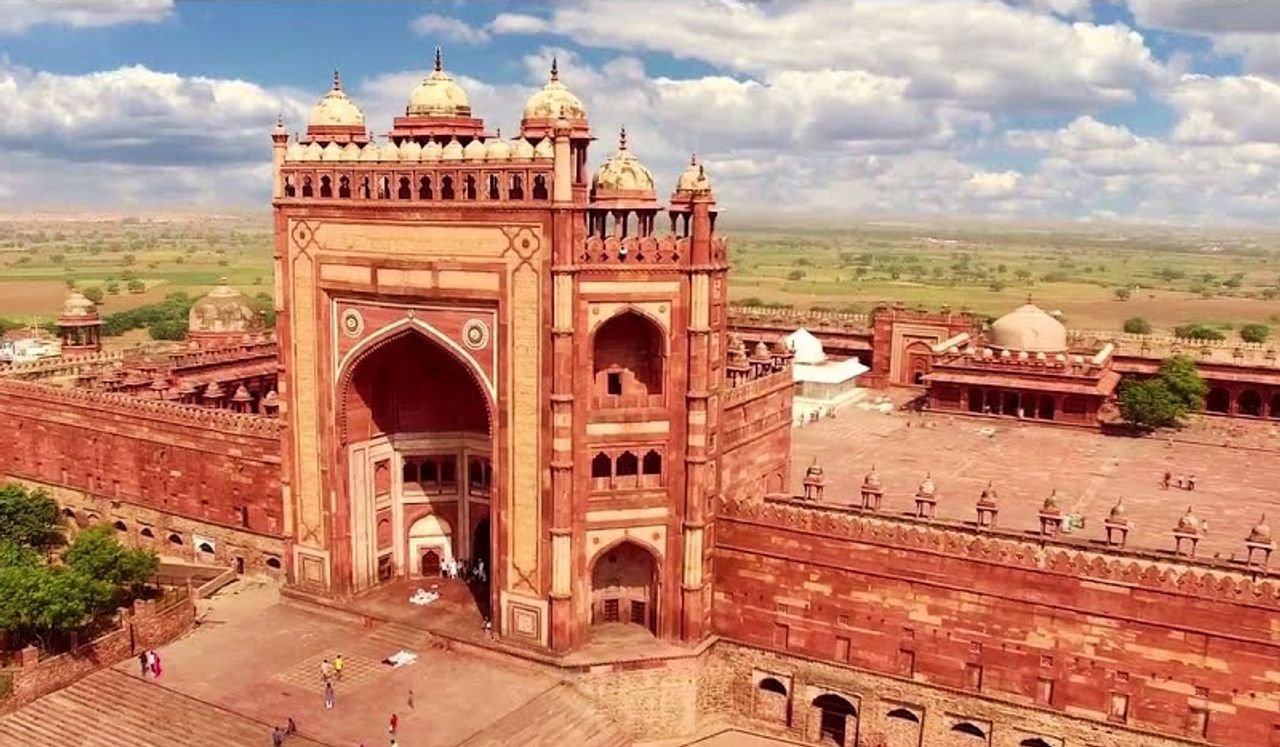
Fatehpur Sikri is not a ruin. It’s a red sandstone dream that Emperor Akbar woke up from too soon. Just 40 km west of Agra, this perfectly planned Mughal capital was built in 1571, lived in for only 14 years, then abandoned because the lakes dried up and the emperor moved on. What he left behind is a ghost city that still looks brand new: massive gates, endless courtyards, palaces for each of his favourite wives, a chessboard courtyard where he played live chess with slave girls as pieces, and the tallest gateway in India (Buland Darwaza) shouting victory from the top of its 54-metre height.
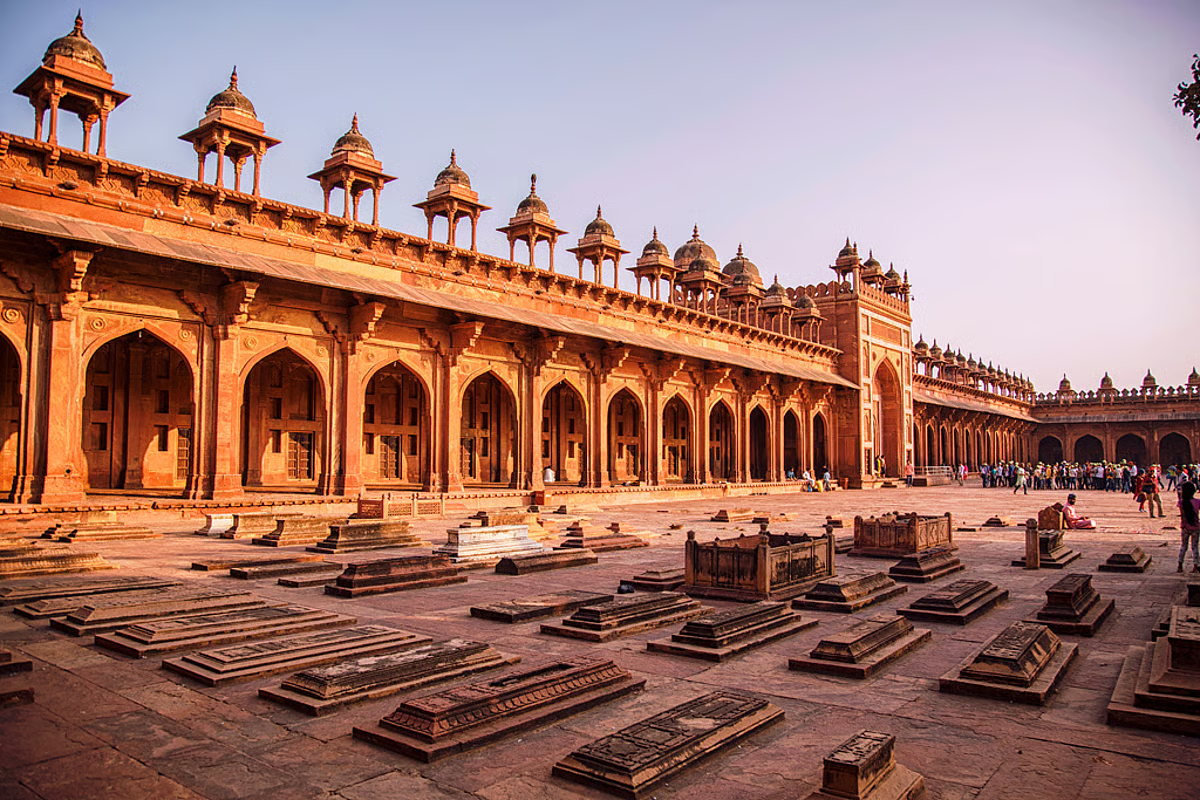
Walk inside and the silence hits you harder than the heat. The red stone glows like embers at sunset, pigeons flap through empty halls where queens once argued over jewellery, and every carving is so sharp you can trace the artist’s chisel marks with your finger. This was Akbar’s attempt to build paradise on earth: Hindu pillars in a Muslim mosque, Jain motifs next to Persian verses, a city that preached peace while armies marched out its gates.
Come early or late, when the tour buses are gone. Stand alone in the white marble tomb of Salim Chishti and watch the afternoon light turn the lattice screens into lace. Tie a red thread if you want a wish (millions have), then walk down to the empty caravanserai and imagine 50,000 people who once lived here suddenly vanishing overnight.
Fatehpur Sikri is proof that even emperors can’t force a city to stay alive. But four centuries later, the stones still refuse to die.